


A unique exotic pearl that boasts many "bests"
The Pearl of Central America
A Mexican film called Pura vida was shown in Costa Rica in 1956, and in it this phrase is a message of eternal optimism, carried by the main character. Since 1970, it has been the unofficial motto of the state. Costa Rica (Spanish: Costa Rica, Czech: literal translation: "rich coast") is a relatively small country. In terms of area and population, it is very similar to Slovakia. It is surrounded by only two countries - Panama and Nicaragua. The only other neighbors are the vast waters of the Pacific Ocean and the Caribbean Sea. The capital of the country of almost five million people is San José, a cultural and commercial center located in the central part. San José is considered the gateway to Latin America.
Costa Rica is a unique exotic pearl that boasts many "bests". A long coastline lined with beautiful beaches and enchanting nature full of various animal species, including almost a thousand that are found nowhere else in the world. This is what attracts enthusiastic travelers from all over the world, who come here primarily for ecotourism, but also for surfing or yoga.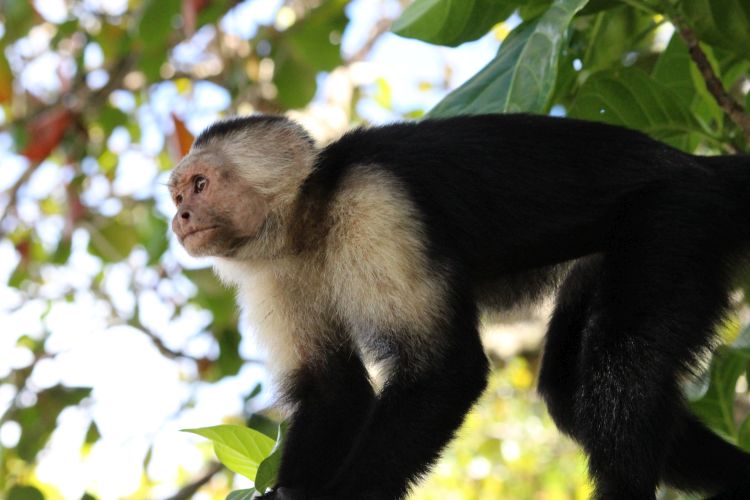
Nature in Costa Rica is truly unique. The analytical company Future Brand ranked it second in the Natural beauty category, even ahead of the celebrated New Zealand. Here you can see sea turtles laying eggs, migrating whales or even a crocodile feast. More than a hundred volcanic formations can be found in the country – approximately seven of them are still active. Costa Rica covers only 0.03% of the planet’s surface, but it contains up to 6% of the Earth’s biodiversity. The diversity of local fauna and flora is one of the largest in the world, with 10,000 flowering plants, 850 species of birds, 3,000 species of butterflies and 209 species of mammals. 30% of the area is made up of nature reserves. There are 20 national parks and eight nature reserves in the country.
Costa Rica became the first Central American country to export bananas and coffee to the world, which still drives the local economy today. The right situation was triggered by the enlightened government in the 19th century, which offered free land to anyone who committed to growing coffee for export, which paradoxically brought stability to the country in the 20th century. The situation is not the same as in neighboring countries, where most of the land is owned by a few of the richest landowners. Costa Rica has not had an army since 1949 - making it one of the few countries in the world that does not have an armed military force (with the exception of the local police). Approximately 95% of Costa Rica's population can read and write, which is a very high percentage for Latin America.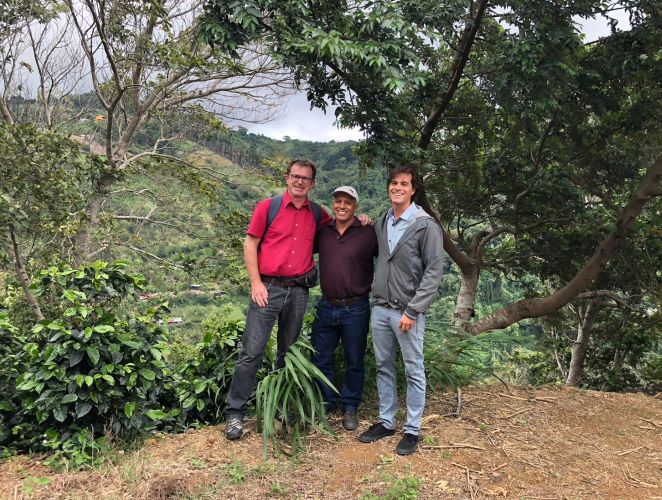
A trip not just for coffee
When I organized a trip to this renowned location in the spring of 2018 and offered participation to several franchise partners, it was almost immediately sold out. Costa Rica has a sound: the main attraction was a visit to our partner coffee projects, of course, in parallel with the beautiful nature. A group of ten excited participants quickly formed, the trip was prepared down to the last detail. However, as it soon became clear, Costa Rica was not just Pura vida for us...
An unpleasant surprise awaited us at Vienna airport, which seemed to foreshadow further events. Our plane to Madrid had not landed due to an engine problem, so the connecting flight to San José was impossible to catch. After hours of searching for alternatives, our group was split up and assigned breakneck replacement flights via Western Europe and the United States. We arrived in the Costa Rican capital, exhausted, thirty hours late. It is obvious that problems accumulate. The car rental company did not count on us anymore, nor did the hotel we had booked in advance. We had to exert all our strength to obtain the services we had booked in advance, but which had been delayed. This meant additional hours of effort, and instead of Saturday afternoon, we checked in late on Sunday night. However, on Monday morning we were ready to set off for the coffee plantations as the original itinerary had prescribed. At this moment, everything was smooth sailing, with the idea that things would definitely go smoothly now, because we had already chosen the difficulties... We are in the land of Pura vida!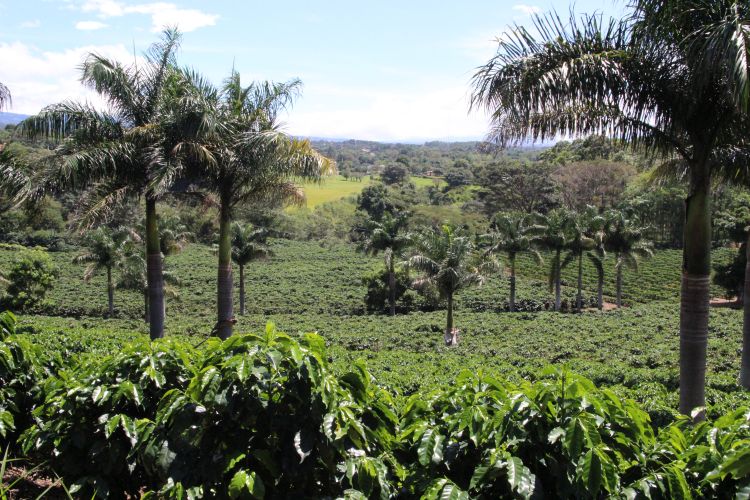
And indeed – the trip to the coffee farmers completely met our expectations. First, we visited the picturesque finca Las Nacientes of farmer Marvin Monge Valverde, which is located in the Tarrazu region at an altitude of around 1,700 m. It was from here that our coffee processed using the honey method, consisting of the Bourbon, Caturra and Catuai varieties, came in 2018. The farm is surrounded by a wild forest, with a stream with clear water flowing along it. On the way here, you have to cross a ford several times. An eco-paradise at a glance!
Since Marvin does not have processing facilities, he has his coffee beans processed at an independent factory, like many other small farmers. That is Palmichal Mill, the place of our next visit. Palmichal is very strategically located from the point of view of coffee growers. It is located on the border of two important coffee regions – the Central Valley and Tarraz and takes care of the harvest of many top farmers from both famous regions. Each lot processed here is completely transparent. Everything important related to coffee is carefully recorded here: grower, variety, location, altitude, harvest date and many other characteristics. Palmichal Mill offers several unique technical solutions that enable the processing of harvested coffee cherries from both micro-growers and large-scale farmers. The factory also includes a coffee nursery, where there are up to 400,000 coffee tree seedlings. This is a non-profit project that represents significant support for farmers.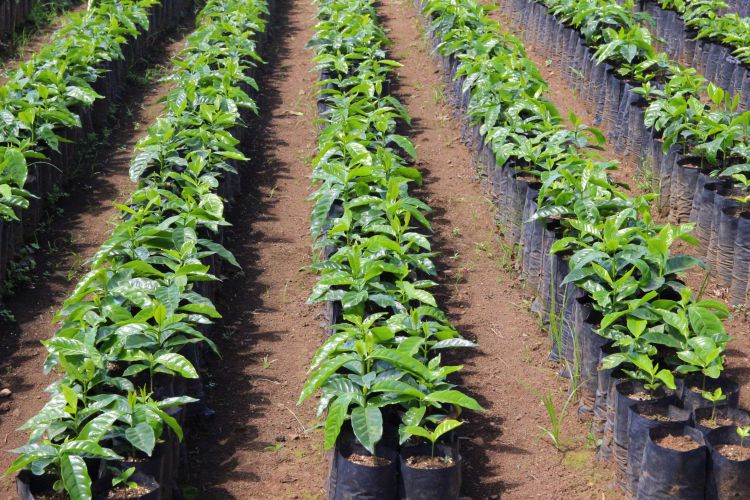
The next destination of our coffee journey was the Sonora hacienda. It is located in the Central Valley near the active Poas volcano at an altitude of approximately 1,300 m above sea level. The farm covers a total area of 100 hectares, of which 20 hectares are forest reserves. It creates a beautiful natural oasis that, in addition to its significant production activities, could serve as an amazing regenerative terroir. The energy of the place is one of my top life experiences. It is owned by Alberto and his son Diego Guardia. Alberto developed coffee cultivation here in 1975. At the end of the last millennium, he invested considerable capital in building his own processing unit with the aim of improving quality. At that time, Alberto became a pioneer in new processing methods, such as honey or natural. Now Sonora produces more than 20 varieties of coffee on 80 hectares of land. Cultivars grown include Red Catuai, Yellow Catuai, Bourbon, Venecia, Typica, Icatu, and the now much-praised Geisha.
We tasted a number of local coffees both on site and at home over the next few months, and for our new range we chose the honey-processed Venecia variety. It is a natural mutation of Caturra, which originates from the Venecia Santa Carlos region of Costa Rica. Its coffee cherries ripen only in the late summer, so they are harvested at the end of the season. The taste of the resulting coffee is rich, rounded, reminiscent of a sweet cake, with a floral note.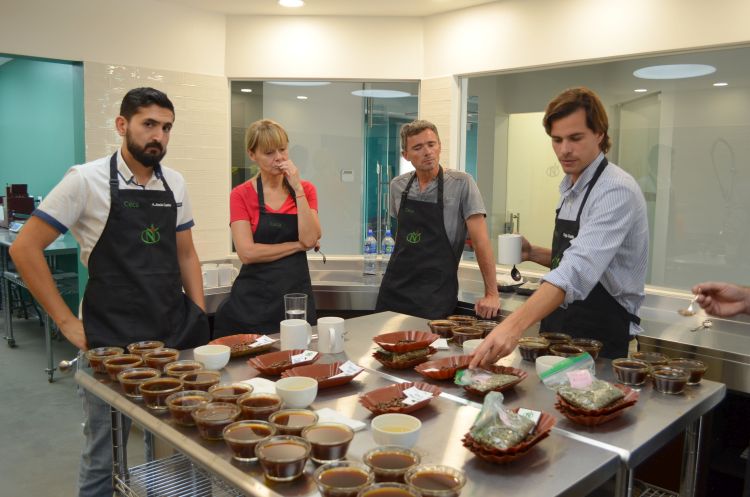
After visiting the Sonora farm, a rainforest reserve with many species of tropical birds, wild mountain waterfalls, centuries-old trees with abundant lianas awaited us in the Alajuela region. Wilderness as it should be. A fabulous end to our coffee journey.
After less than three days at the coffee projects in the Tarraz and Central Valley areas, we return to the capital, San José. As we leave the wonderful natural scenery, Pura Vida seems to be receding. Both of our rented cars start to misbehave and the engine sometimes stalls on the hill. This is a bad omen for our further move to the Caribbean Sea.
Before we head to it, we have a rich coffee tasting at the CECA premises, where Albert and Diego Guardia rent out their premises. We taste coffee from a range of cultivars from the Sonora hacienda. A successful, dignified coffee finale.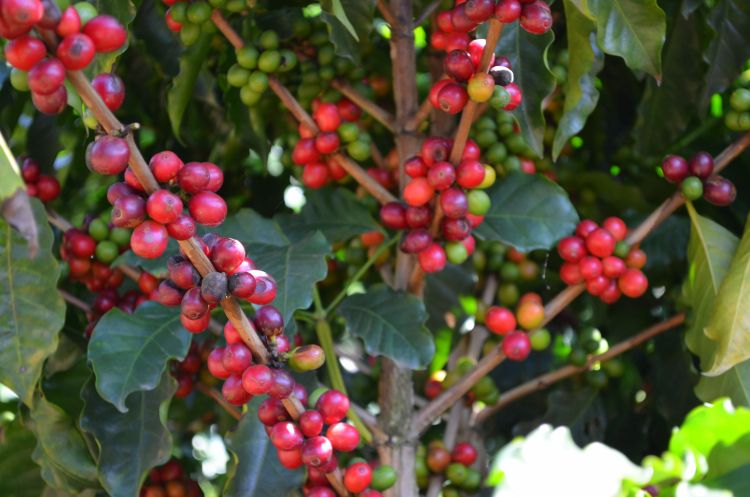
Treacherous Sea
That same afternoon we head to Limón, a port metropolis on the Caribbean Sea. The road from San José winds through mountainous landscapes through dense tropical forests. The sea approaches, and with it the lowlands, on which seemingly endless banana plantations are located. The road is clogged with used American trucks, most of which are driven by barely grown-up young men. One sees in reality what the world of large multinational monopolies looks like: a banana factory spewing out containers of goods to markets all over the planet, minimal costs for their production, an invisible headquarters somewhere in the distance calculating profits...
However, Puerto Limón is not the end of the banana industry, but of virtually every other industry. We head south along the coast towards the Panamanian border: everywhere there are only wild trees and flocks of exotic birds. Our destination is the holiday villages of Cahuita and Puerto Viejo. We plan to spend the remaining three days there, to forget about the difficult journey in peace and absorb the wonderful experiences of the coffee plantations. The car finally recovered and took us to our final destination without a breakdown. Pura vida, as it should be!
The first two days were truly wonderful – we visited the Punta Cahuita reserve, swam in the warm Caribbean waters, listened to authentic Central American reggae in a local pub, and tasted the local fresh fish.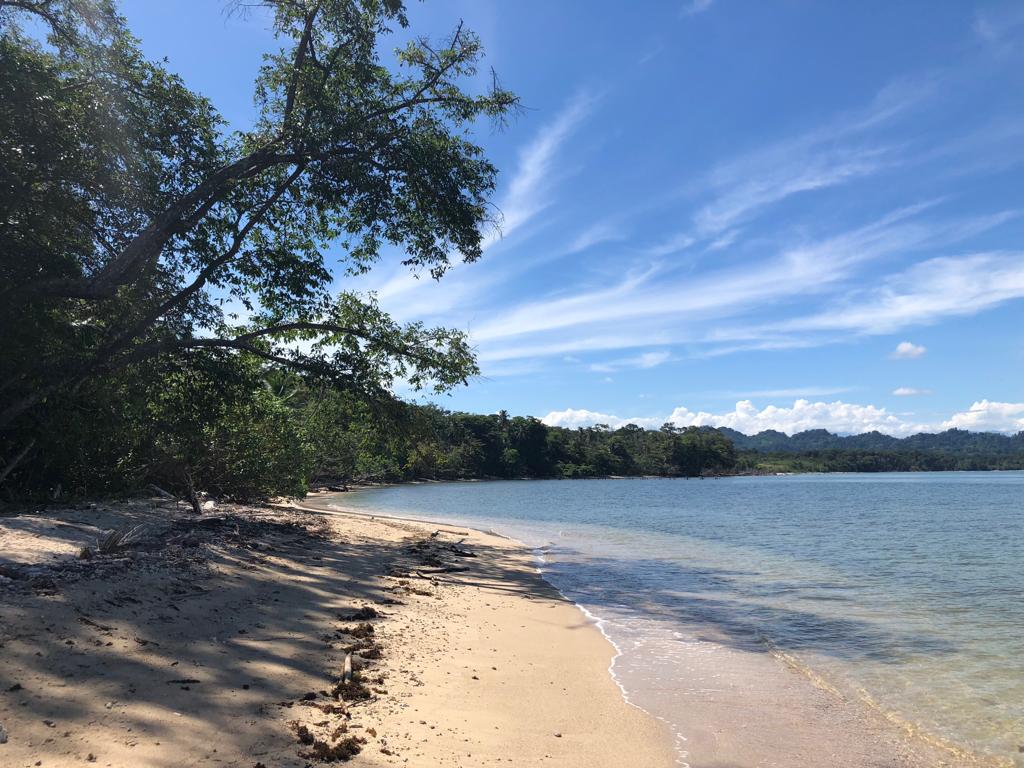
However, on the Friday before our departure, clouds rolled in and the sky darkened. We decided to take a walk along the famous Playa Grande beach – at that moment, just before the tropical rain. No one was there, only two forgotten surfers were just leaving the sea. The waves were not very high, so we decided to take a swim. After all, nothing can happen in shallow waters close to the shore… Seven out of ten of us entered the sea, the water was no more than waist-deep. Before you could count to five, we suddenly couldn’t feel the ground under our feet. What’s more, the current wouldn’t let us back to the shore. Yes, panic set in, a fight with the water element. We got into a rip – a current that carries water back into the ocean. We had no idea about the phenomenon, we didn’t know what was happening. There was a little soul in each of us… However, the Universe (God) was extremely kind to us. He arranged for the current to be just strong enough so that we could gradually return to shore. With various difficulties, we finally succeeded, but one of us was saved by a surfer who was slowly leaving the place by car. Called by one of the first rescued, she quickly assessed the situation, took the board out to sea and almost miraculously brought the exhausted body back from afar.
Everything ended happily. Fate challenged us, literally washed us out of trouble – and let us back into life. This is what Pura vida can look like.
However, this does not change the fact that Costa Rica is a true natural beauty. On our first visit, it simply decided to show, in a quarrelsome way, that it is not so easy to get hold of...